Thursday, May 6, 2010
Palace of Holyroodhouse, Scotland
The Palace of Holyroodhouse, the official residence in Scotland of Her Majesty The Queen, stands at the end of Edinburgh's Royal Mile against the spectacular backdrop of Arthur's Seat. This fine baroque palace is closely associated with Scotland's rich history.
The Palace is perhaps best known as the home of Mary, Queen of Scots, and as the setting for many of the dramatic episodes in her turbulent reign. Mary was married at Holyroodhouse and witnessed the brutal killing of her secretary Rizzio by her jealous second husband, Lord Darnley, in her private apartments. The Palace briefly served as the headquarters of Bonnie Prince Charlie during the 1745 uprising.
Today the State Apartments are used regularly by The Queen and other members of the Royal Family for State ceremonies and official entertaining.
Wednesday, May 5, 2010
Mouseman, Northern Yorkshire, England
We visited the workshop of Robert Thompson's Mouseman furniture in Northern Yorkshire. All the furniture is made of oak and has a mouse carved somewhere on it. In my next life, maybe I can afford a small piece of the beautiful furniture made there.
Tuesday, May 4, 2010
Monday, May 3, 2010
Yorkshire, England
"There were all kinds of travelers- inquisitve travelers, idle travelers, vain travelers- but the true value of travel was not in strenuous sight-seeing. It was in opening one's heart to feeling."
Laurence Sterne, A Sentimental Journey
Sunday, May 2, 2010
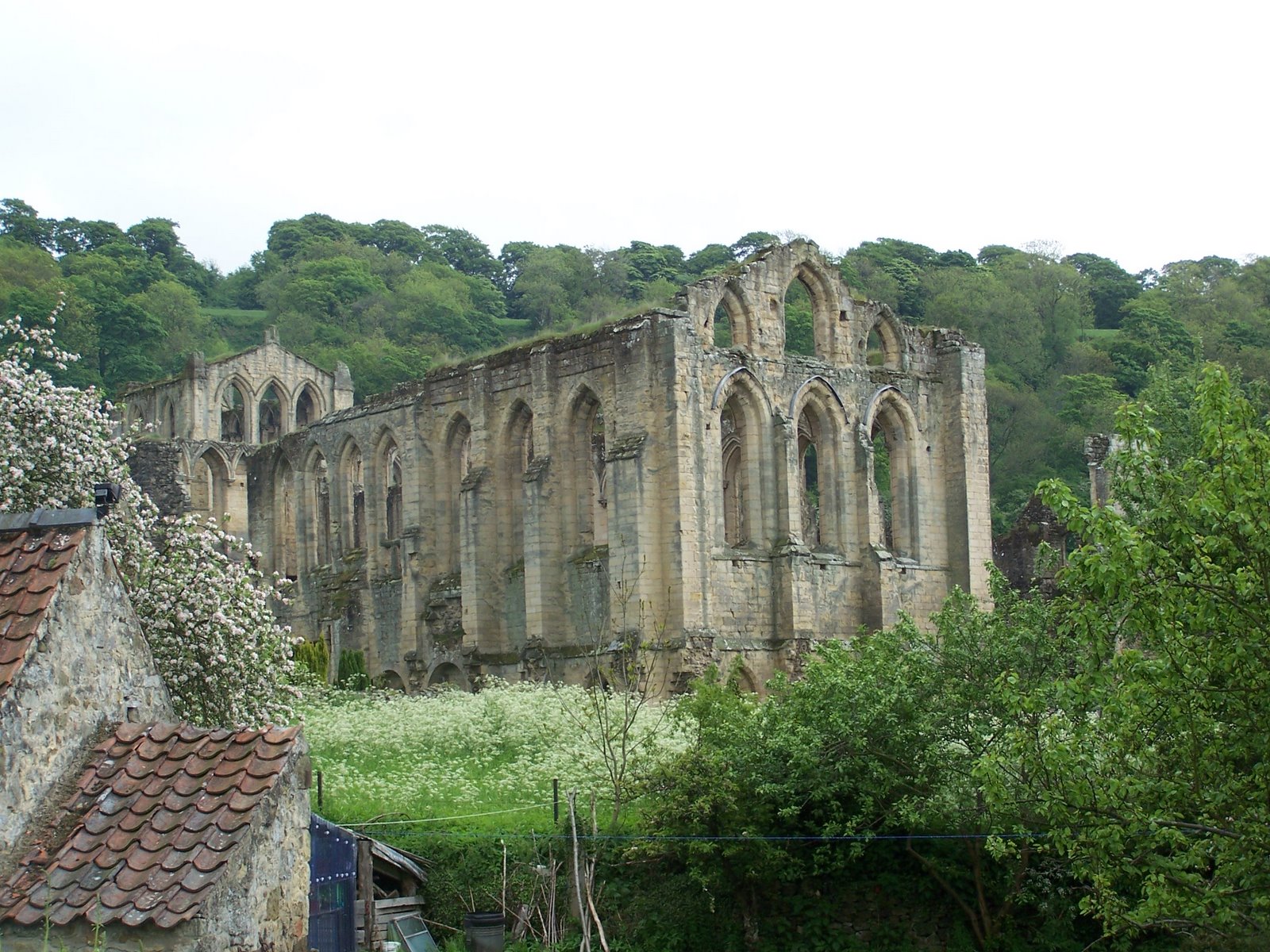
Byland Abby, Yorkshire, England
,
Byland Abbey and the Dissolution of the Monasteries
Like many small communities in northern England, Byland Abbey was particularly hard hit by the Black Death. The epidemics of the fourteenth century cut the abbey’s population from around 240, to just fourteen.
Investigators for the Dissolution of the Monasteries arrived at Byland in February 1535. Three years later, when all the formalities were complete, less than twenty monks were present as the abbey was formally surrendered to the Crown.
Like so many of England’s monasteries, Byland gradually fell into disrepair and the monastic buildings were gradually plundered for use in other building projects in the area. However, the monastery’s remains are substantial and medieval floor tiles and a portion of the rose window still survive, to give visitors a tantalising glimpse of what it would have been like to see one of England’s finest abbeys in its medieval heyday.

Byland Abbey and the Dissolution of the Monasteries
Like many small communities in northern England, Byland Abbey was particularly hard hit by the Black Death. The epidemics of the fourteenth century cut the abbey’s population from around 240, to just fourteen.
Investigators for the Dissolution of the Monasteries arrived at Byland in February 1535. Three years later, when all the formalities were complete, less than twenty monks were present as the abbey was formally surrendered to the Crown.
Like so many of England’s monasteries, Byland gradually fell into disrepair and the monastic buildings were gradually plundered for use in other building projects in the area. However, the monastery’s remains are substantial and medieval floor tiles and a portion of the rose window still survive, to give visitors a tantalising glimpse of what it would have been like to see one of England’s finest abbeys in its medieval heyday.
Saturday, May 1, 2010
Haunted York

The fellow on the top was our tour guide, and he was incredible. Much of the tour was held in the dark which added to the atmosphere. The magnificent home in the center picture has had numerous sightings of Roman soldiers marching through the basement area. Well, it is an ancient city... The bottom picture was the sight of a tragic fire that killed numerous orphaned children. The wicked and cruel caretaker allowed them to burn without rescue. Pretty grizzly...
Subscribe to:
Posts (Atom)